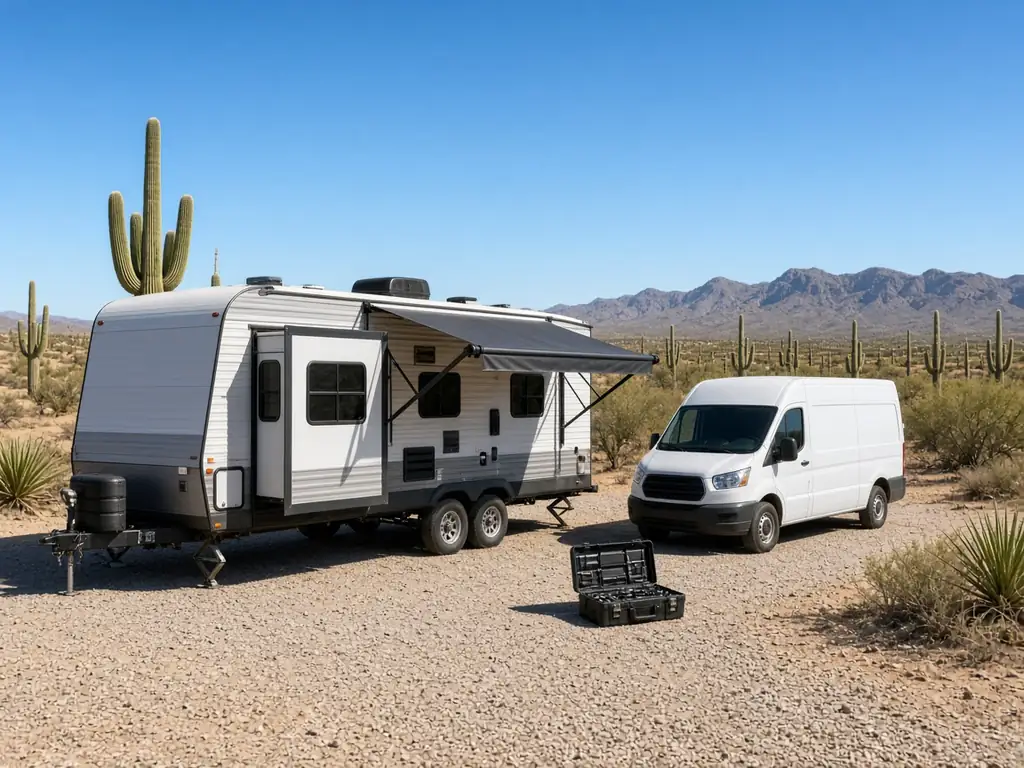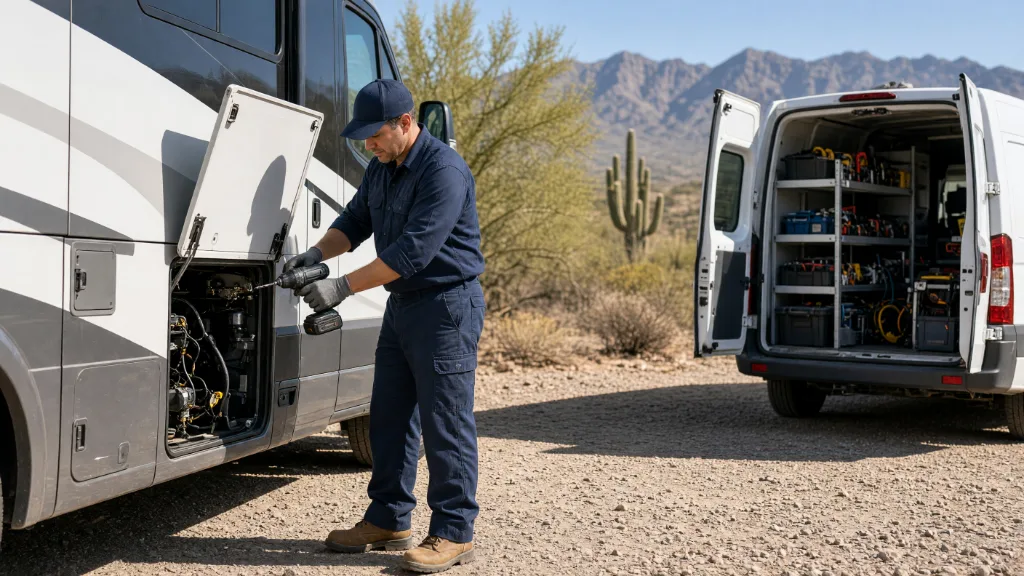
Pack rats are native Arizona rodents, and University of Arizona Extension says they occasionally damage vehicles and wiring. An RV that sits for months in Tucson gives them a sheltered place to nest. If you find a nest or chewed wires, clean up the safe way first, then have the wiring tested before you rely on the RV. We repair RV wiring where the RV is parked as part of our mobile RV repair; removing the animals is a job for a pest control service.
Key takeaways
- Pack rats occasionally damage vehicles and wiring (University of Arizona Extension).
- Rodents may build nests in cars, trucks and campers (CDC).
- Never sweep or vacuum droppings or nest material; wet them with disinfectant or a bleach solution and let it soak (CDC).
- Air a vehicle out for 20 minutes before you clean it (CDC).
- Native rodents are protected nongame mammals under Arizona law (University of Arizona Extension).
What are pack rats, and why do they get into RVs?
Pack rats are native desert rodents of the genus Neotoma, and several species are common in Arizona, according to University of Arizona Extension. Adults measure 12 to 14 inches including the tail. They are mostly active at night, climb and dig well, and build nests, called middens, from sticks, stored food and debris. In the desert those nests are common at the base of cholla cactus, but the same publication says pack rats sometimes move into the attics and walls of houses. The CDC says rodents may build nests in cars, trucks and campers, and an RV parked for months offers the same shelter.
What are the signs of pack rats in a stored RV?
A pile of sticks, cactus pieces or leaves in a compartment, droppings, and chewed insulation are the usual signs. University of Arizona Extension says pack rats are drawn to small, bright, shiny objects and often carry them off, leaving sticks, nuts or cactus pieces in their place. So a missing small item next to a pile of desert debris is a clue. Check the generator and battery compartments, the engine bay on a motorhome, and the underbelly openings where hoses and wires enter. Lights, slides, jacks or appliances that stopped working after storage can point to chewed wiring.
| Sign | What it can mean | What to do |
|---|---|---|
| Sticks, cactus pieces or leaves in a compartment | A pack rat nest | Do not sweep it out dry; follow the CDC steps below |
| Droppings | Rodent activity | Wet them with disinfectant and let it soak (CDC) |
| Chewed wire insulation or connectors | Wiring damage | Have the circuit tested before it is used |
| Lights, slides or appliances dead after storage | A damaged circuit, a blown fuse or a flat battery | Check the batteries, then have the wiring traced |
Can pack rats damage RV wiring?
Yes. University of Arizona Extension says pack rats occasionally cause damage to vehicles and wiring, and an RV has more wiring than a car: the 12-volt and 120-volt circuits that run the lights, slides, jacks, water pump, furnace and refrigerator. Chewed insulation can leave a circuit dead, blow a fuse or let bare wires touch, so a damaged circuit should be tested before it is used again. Damage can hide inside compartments and behind panels near a nest, so one working light does not mean the rest of the wiring is fine. See RV electrical problems in Tucson.
What should I do before cleaning up a pack rat nest in an RV?
Air the RV out, put on gloves, and wet the droppings and nest with disinfectant before you touch them. The CDC says not to vacuum or sweep rodent urine, droppings or nesting materials, and for a vehicle it says to open it up and let it air out for 20 minutes first. University of Arizona Extension says white-throated pack rats are reported carriers of arenaviruses, which people can catch by breathing in the virus when droppings or nesting material are disturbed during cleanup. Follow these CDC steps, and do not run the RV's systems until the wiring has been checked.
- Open the doors, the hood and the compartment doors, and let the RV air out for 20 minutes.
- Put on rubber or plastic gloves.
- Spray droppings, urine and nest material until very wet with an EPA-registered disinfectant or a bleach solution of 1.5 cups of household bleach in 1 gallon of water.
- Let it soak for 5 minutes, or as long as the disinfectant label says.
- Pick it up, bag it, and put it in a covered garbage can.
- Do not use a vacuum or a pressure sprayer on it.
How do you repair pack rat damage to RV wiring?
We trace every circuit that stopped working, repair or replace the damaged wire and connectors, and test the systems on that circuit. A technician starts at the batteries and fuses, then follows the wiring through the compartments the nest touched. Chewed sections are cut out and replaced with wire of the same size, and the connections are sealed. Then the lights, slides, jacks, water pump, furnace and refrigerator controls are tested on battery and shore power. Removing the animals and the nest is a pest control job; we repair what they damaged. If the batteries went flat over the summer, see RV battery replacement.
How do I keep pack rats out of a parked RV?
Close the gaps and keep the parking spot clear of debris. University of Arizona Extension says the emphasis for keeping native rodents out is on sealing up buildings and the places vehicles are housed. It says to keep areas free of fallen fruit, leaves, twigs and other debris that offer food and shelter, and to check cholla and other cactus nearby, where pack rats den. On an RV, look at the openings where hoses and wires enter the underbelly and compartments. Native rodents are protected nongame mammals under Arizona law, the same publication notes, so call a pest control service for removal.
Tucson Pack Rat and RV Wiring FAQ
Are pack rats common in Tucson?
Yes. University of Arizona Extension says white-throated, desert and several other pack rat species are commonly found in Arizona and the desert Southwest.
Do you remove pack rats from RVs?
No. We repair the wiring and systems they damage. For removal, call a pest control service; University of Arizona Extension notes that native rodents are protected nongame mammals under Arizona law.
Is it safe to vacuum pack rat droppings in my RV?
No. The CDC says not to vacuum or sweep rodent urine, droppings or nesting materials. Spray them with a bleach solution or disinfectant until very wet, and let it soak first.
How much does pack rat wiring repair cost in Tucson?
It depends on how many circuits were damaged. A published national cost guide puts RV electrical repairs anywhere from within the base labor charge to more than $2,500, and published national data puts mobile technician labor at about $145 to $180 an hour plus a $75 to $150 trip fee. Your repair price is confirmed before work starts.
Sources (accessed November 27, 2026): CDC: How to clean up after rodents · University of Arizona Extension: Pack rats (2023) · published national mobile RV repair cost guides